

You’ll find a solar water heater in almost every home, its purpose is to heat the household’s domestic water for the people who live there. Customers often ask us about the key differences between solar collectors for heating domestic water (the kind built into a home water heater) and solar collectors for heating pool water, like the solar panels we make at Magen Eco-Energy. The principle behind both systems is actually the same, and remarkably simple: solar collectors convert sunlight into heat to warm the water. That said, the materials differ, the heating process works differently, and of course the water is ultimately used for different purposes. Below, we’ll look at the differences between the two systems.
A solar water heater is made up of two main parts, the storage tank (which holds the water) and the solar collector. Because of their dark color, the collectors heat up in the sun. Thanks to the material they’re made from, usually galvanized steel, stainless steel, copper, or aluminum, they conduct heat well and the air inside them gets very hot. The water in the pipe is now surrounded by this heated air, so it absorbs the heat and warms up. The tank sits higher than the collectors, so the heated water rises into it through the pipe while cooler water flows down to the collectors to be heated in turn, and the cycle repeats. The system’s performance can be improved with a heat booster that shortens the wait for hot water, an electric backup element (for cold days when the sun alone can’t heat the water), and a thermostat that regulates the water temperature in the tank and tells the heating element to shut off once the water reaches the desired temperature (around 65°C).
The most significant difference is that a residential solar collector works with high temperature and pressure over a small volume and low flow rate of water, while a pool heating collector handles a large volume of water at high flow rates, low pressure, and a relatively low temperature of 28-32°C.
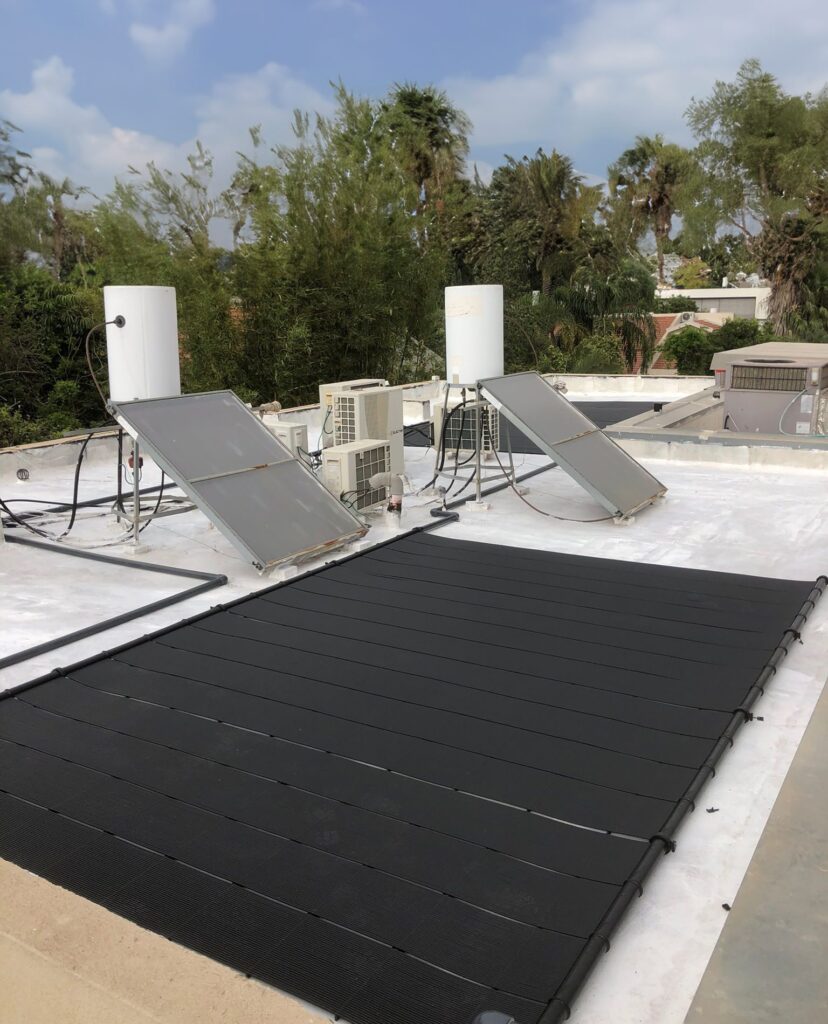
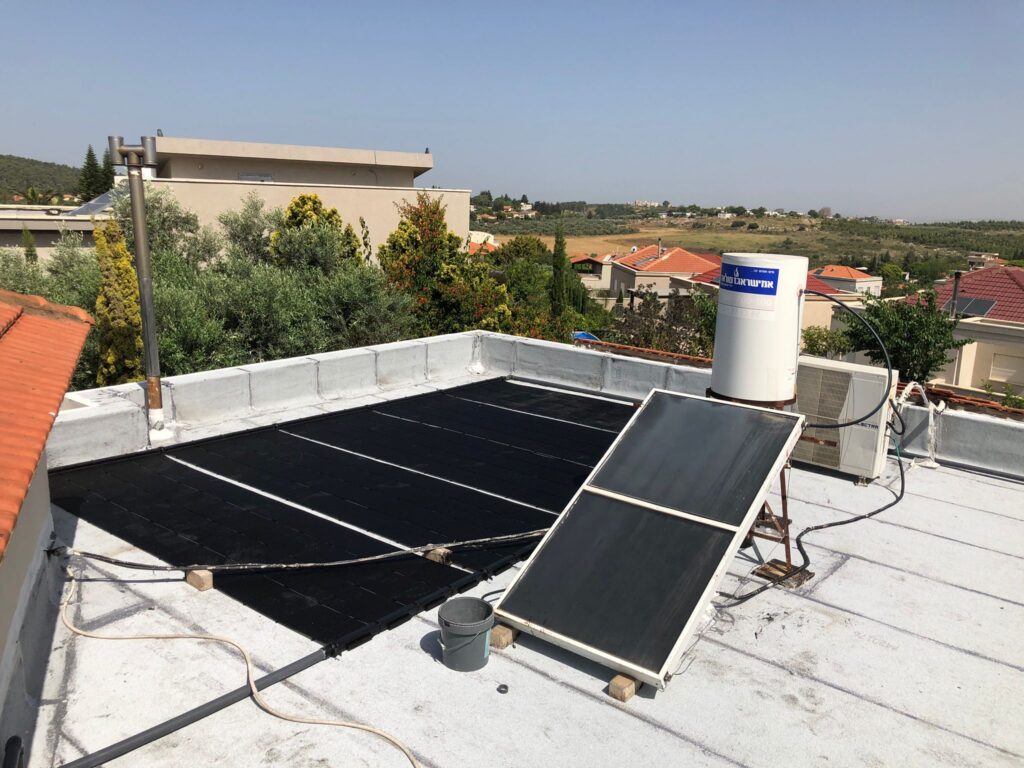
How do solar collectors for pool heating work?
A pool heating system consists of four main components: a solar collector, a circulation pump, piping, and a control system. The circulation pump draws pool water through the filter and into the solar collector. The water enters the collector at its lower end and flows upward through the individual tubes of the absorber surface, where sunlight heats the water in the tubes before it’s returned to the pool, and the cycle repeats. The collectors are managed by a controller connected to two sensors, one that measures the pool water temperature and another that measures the outdoor temperature, so the system knows when to stop circulating the water once it’s warm enough. The heating system has an especially long lifespan of around 25 years, in any weather conditions.
Our plastic solar collectors have proven highly effective at pre-heating water (for showers, kitchens, laundry) in large public organizations. In fact, it stands to reason that for hotels, country clubs, and various sports facilities, heating with pool solar collectors can be more beneficial than using domestic solar water heaters, which heat a smaller volume of water, wear out faster, and require more energy. So, public facilities that already have a pool heating system installed can certainly put it to use for pre-heating shower water, laundry water, and more, of course alongside a gas or electric backup system. This saves energy with a fast return on investment, while enjoying high flow capacity and a system that requires very little maintenance, being especially resistant to scale, corrosion, chemicals, and more.