Balanced water = clear, healthy water
● Clearer water, more effective chlorine – When your pool is balanced, the chlorine works at its best and you need less “super-chlorination.” When the pool is out of balance, on the other hand, the water turns cloudy, unpleasant and unclear. Fun? Not really. Healthy? Definitely not.
● Save on extra chemicals – Who likes unnecessary chemicals in their pool? Probably no one. When your pool is balanced, you need far fewer extra chemicals to compensate for the imbalance, and your pool water becomes much healthier.
● Skin irritation – Every time our skin is exposed to harsh chemicals, the risk of irritation increases (rashes, eye irritation, itching and more). When the pool is balanced, this simply doesn’t happen. After all, the whole point of keeping pool water balanced is to stop bacteria from multiplying and to keep the water clean.
● Equipment damage – Invested in pool equipment? Great, but if the pool isn’t balanced, it can lead to corrosion and serious damage. That’s why it’s well worth keeping your pool balanced and saving on costly equipment replacements.
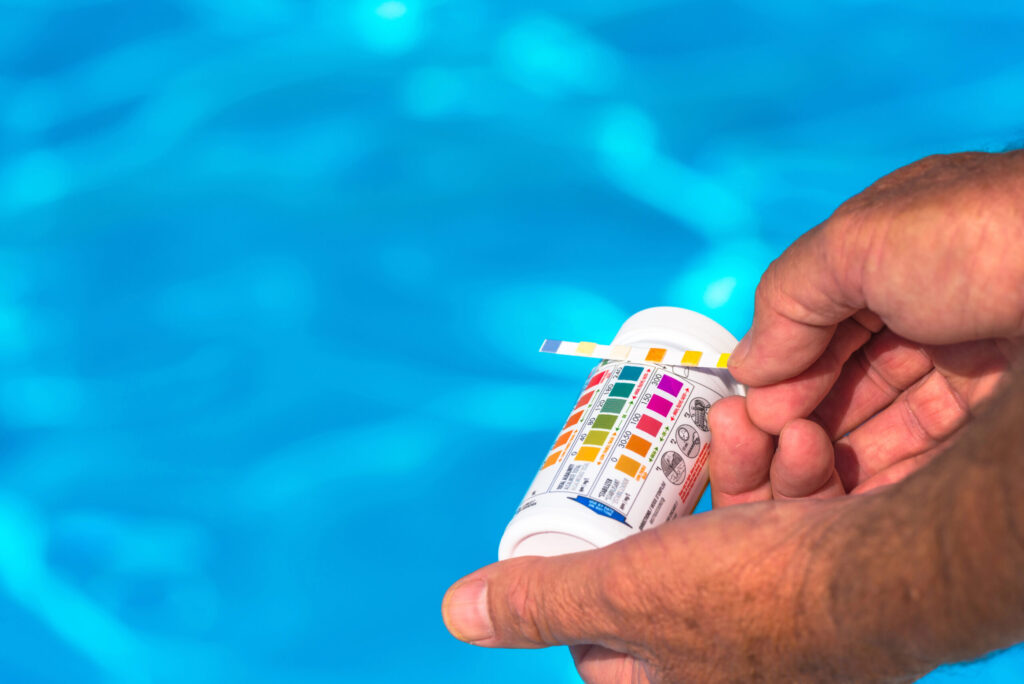
5 quick tests: how to check if your pool is balanced
1. Acidity level (pH)
Recommended value: 7.2
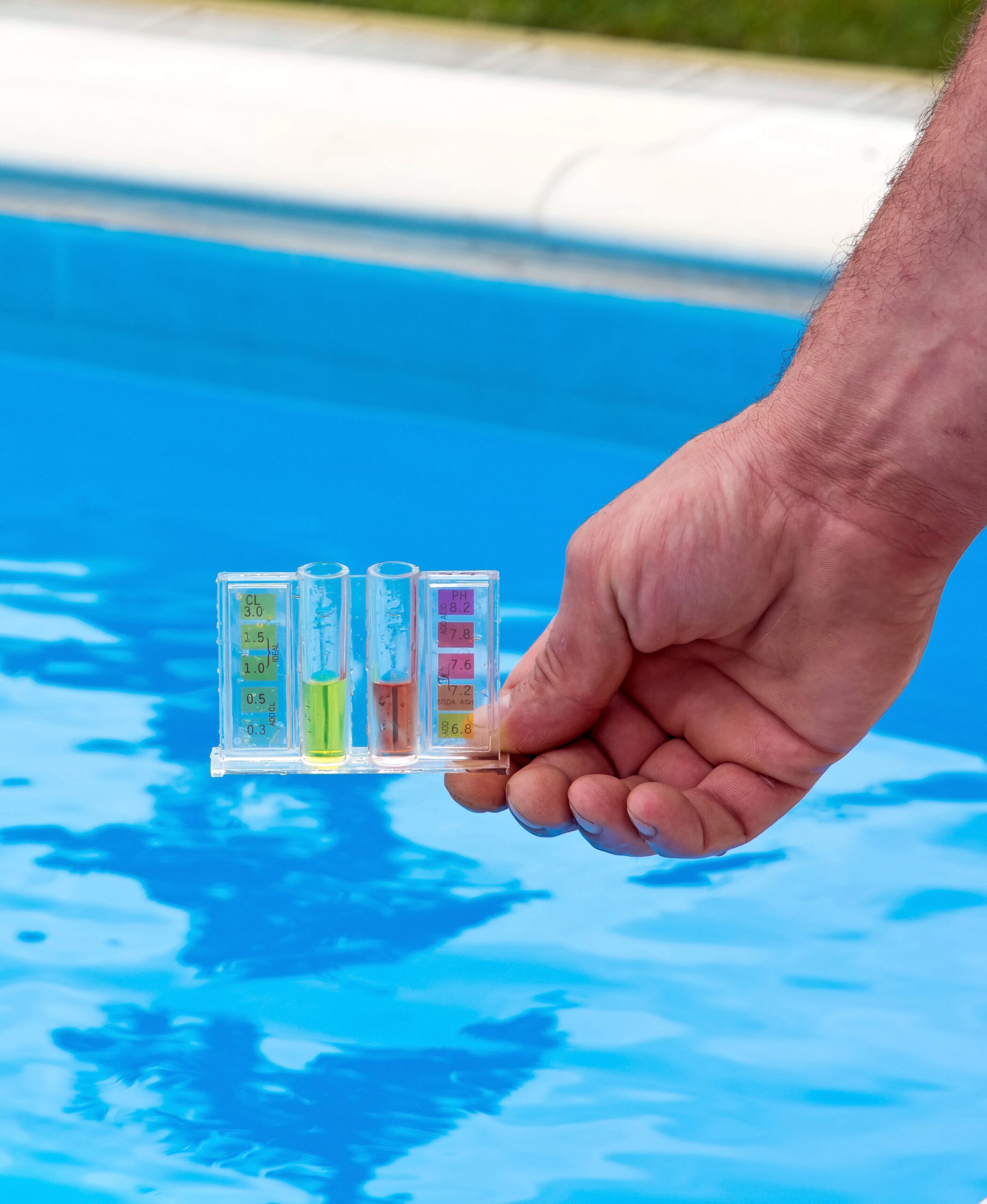
The acidity level of the water, the pH, is one of the most important values affecting your pool’s balance and the other chemicals in the water. When the pH is too high, the water can become cloudy, the chlorine less effective, and you may experience eye irritation and stinging. When it’s too low, on the other hand, your equipment suffers from corrosion, and there’s also a risk of skin and eye irritation. What’s the solution? Balance it!
So what do you do?
Test the pool water to measure the pH level. The accepted range is 7 to 7.5 (with the ideal, as mentioned, being 7.2). Found the pH too high? Add pH minus. Is it lower than normal? Add pH plus.
2. Chlorine level
Recommended values: 1-3 PPM
Chlorine is the pool’s best friend, or more precisely, the key to disinfecting it. It’s a stable, effective substance that keeps bacteria away from the swimming pool, but it isn’t perfect: too much chlorine can cause skin irritation and even become toxic, while too little leaves the pool undisinfected. How do you avoid chlorine’s risks while still keeping the pool clean? You’ve probably already guessed: by keeping the values balanced.
So what do you do?
You can test the chlorine level using test strips, tablets and dedicated test kits. Want to enjoy a better quality of life and a much healthier pool? Check out our automatic pool disinfection systems, which sanitize the water without causing irritation or other side effects.
3. Salinity (NaCl)
Recommended values: 3,000-4,500 PPM
(For low-salinity systems: 1,500-2,500 PPM)
When salt levels in the pool are too low, chlorine production can also drop too low, leading to the growth of algae and bacteria. On the other hand, when salt levels are too high, it causes unnecessary corrosion to the pool equipment.
So what do you do?
Measure the salinity level using a dedicated test kit and act according to the results: if the salinity is higher than needed, dilute the salt with water. If it’s low, add salt as needed. Our salt calculator can help you with this.
4. Chlorine stabilizer (cyanuric acid, CYA) for pools exposed to sunlight
Recommended values: 20-50 PPM
When the sun’s rays hit the pool water during the summer months, the strong UV radiation breaks down the chlorine meant to disinfect the water and speeds up its breakdown rate. The result: the chlorine evaporates too quickly, before it has had a chance to properly disinfect the water. Adding a chlorine stabilizer slows the evaporation rate, saves on chlorine costs and helps keep the pool cleaner.
That said, excessively high stabilizer levels in the pool hurt disinfection effectiveness, and when levels are very high (above 80 mg per liter), the pool must not be used at all.
So what do you do?
To check whether your pool has dangerous stabilizer levels, use a dedicated test kit. Follow the manufacturer’s instructions and run the test: found stabilizer levels too high? Freshen the water by adding new water, until the cyanuric acid level comes down.
● In pools that are covered most of the day, or indoor pools, it’s best not to use a stabilizer at all.
5. Water hardness (Calcium Hardness)
Recommended values: 150-400ppm
Water hardness refers to the amount of calcium and magnesium salts in the water. When the level is too high, it can erode the grout (the cement-based material used to fill the gaps between ceramic tiles), cause severe scale buildup in the pipes, heating elements and other areas, and the water is then called “hard water.” When the hardness level is balanced, the mineral deposits stay balanced too, preventing scale that could damage your pool equipment.
So what do you do?
If the water is hard, it’s worth replacing the pool water and treating any scale buildup on the spot. If you find the water is especially salty (e.g., from well water), it’s best to refill the pool using a water softening system.
Bonus for advanced pool owners: two more tests
6. Alkalinity (Total Alkalinity)
Recommended values: 80-120 PPM
Can your water neutralize acid? Alkalinity is often called the “big sister of pH,” since it “protects” the acidity level from unwanted swings. It’s such an important value for a balanced pool that we check it even before measuring the pH level (the big sister, remember?).
Why does this matter? If the water’s alkalinity is too low, it puts the pool’s structure and metal components at risk, and can crack and damage them. On the other hand, if alkalinity is too high, the pH becomes hard to balance, and we already know where that leads. A balanced alkalinity level makes for a better, healthier pool.
So what do you do?
If testing shows alkalinity is too high (above 120 PPM), add hydrochloric acid (muriatic acid). If, on the other hand, the pool’s alkalinity level is lower than it should be, add sodium bicarbonate (baking soda).
7. Total dissolved solids (TDS)
How many dissolved solids are in your pool? That’s okay, you probably have no idea what that even means. What is worth knowing? First, that a dissolved solid is any chemical that enters the water and dissolves during pool use. Salt, for example, is a desirable dissolved solid. Calcium, on the other hand, causes damage.
Over time, the level of dissolved solids in the water rises. Why? This can happen due to water evaporation, dirt entering the pool, added chemicals and other causes.
Excessively high levels of dissolved solids can cause unwanted side effects, such as cloudy water, equipment corrosion, algae growth and stains on the pool walls, along with unnecessarily higher chlorine consumption.
So what do you do?
If the pool water hasn’t been replaced in several years, or if chemicals have been used excessively and the TDS level is high, it’s best to freshen or replace the pool water.