

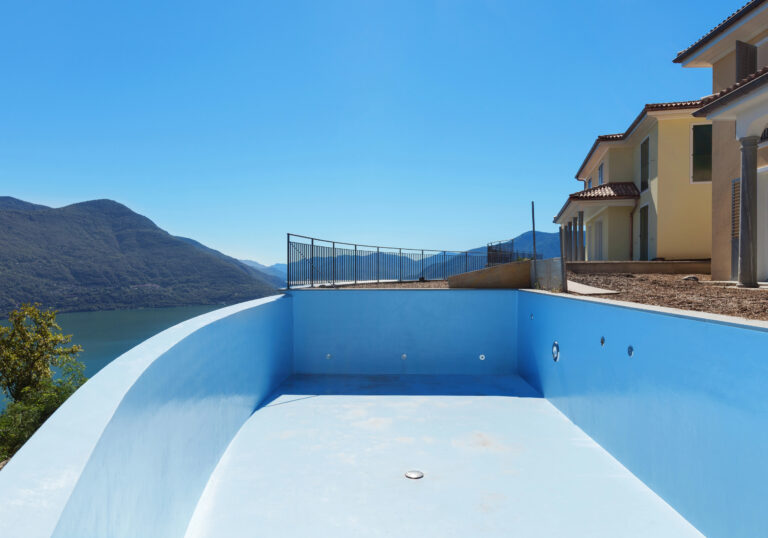
As the cold days return, the swimming season comes to an end. Pool maintenance mostly happens in summer, at the peak of the season, but that doesn’t mean you should neglect your pool once it’s out of use. Keeping it in good condition now means you can enjoy it again once the next swimming season begins.
Safety Considerations for an Open Pool in Winter
The biggest question pool owners face is whether to leave water in the pool, and if so, how to care for it. First, consider the safety angle. In summer, the pool is front of mind: we use it often and stay alert and careful around it. In winter, though, an open pool becomes a safety hazard, not just for the household but for visitors and pets too. An empty pool is a fall risk, while a full one carries a drowning risk. Untreated water can also harbor illness. Either way, with or without water, we recommend covering the pool with a rigid cover to protect both the pool and its surroundings.
Freeze Risk: When to Drain the Pipes
In areas at risk of freezing, we recommend draining the pool, since freezing water expands, and water left in the pipes can cause irreversible damage. In the northern United States and in Europe from France northward, pools are typically drained for winter. In Israel, almost no regions face this risk except the northern Golan Heights. If you decide to drain the pipes over winter and you have a pH sensor installed, remove it from the pipe and make sure it stays submerged in water throughout storage, so it doesn’t dry out.
Should You Drain the Water or Leave It?
Another factor to weigh is water conservation. If you drain the pool instead of leaving and treating the water, you’ll need to refill it completely at the start of the next swimming season. On the other hand, a pool with treated water stays in better visual condition than one left untreated: aside from some settling dust, you won’t get algae growth, dirty water, insects, and so on.
There’s no single blanket recommendation for pool water in Israel, but as a rule, we suggest leaving the water in place with basic treatment. This approach conserves water, keeps the pool looking presentable, and makes it much easier to get up and running again when the season starts.
Basic Water Care Through the Winter
The goal is to maintain minimal chlorine and acidity levels. Cold water slows bacterial growth, so less chlorine is needed. The Resilience D and D Plus chlorinators let you sanitize the pool with peace of mind: every Magen salt system includes protection for cold water. When the systems detect that the pool water has cooled, they automatically reduce the chlorine production rate. Besides sanitizing with the salt chlorinator, it’s a good idea to run the robotic cleaner periodically and to cover the pool to keep out dust and rain.
Running equipment like the circulation pump and the robotic cleaner does have a cost, but over the long run it pays off. When the swimming season opens, you avoid the headache of intensive cleaning to clear algae and grime, which is typically what you’re left with in a pool that wasn’t cared for.
What to Do With Your Pool Equipment
What about the pool equipment? If you decide to drain the water, cleaning equipment can simply be stored away for the season. That said, it’s important to leave water in the chlorinator’s pipework, since these devices are designed to sit in water. Accessories like ladders are best stored indoors rather than left outside. As for cleaning the pool itself, whether you drain it or leave the water in, make sure branches and debris don’t build up around the suction ports, especially the lower ones, since this can clog the system.
Getting Back Up and Running at the Start of the Season
Whether you drained the pool, left the water untreated, or maintained it through the winter, once the swimming season begins we recommend working alongside a professional, technician, or your pool installer. If the pool wasn’t cared for over winter, plan on a thorough cleaning, either yourself or with a cleaning company. Before starting the chemical balancing process, the pool needs to be completely clean, free of sand, debris, insects, and so on. First, fill it with clean, ordinary water. Then balance the water to swimmable condition, with a minimal chlorine level that kills bacteria and a pH balance that lets the chlorine work effectively. A salt chlorinator works gradually and struggles to reach optimal sanitizing levels right away, so at the start of the season we recommend using tablets or liquid chlorine until levels are within range. Once the levels are balanced, you can bring the salt chlorinator online. Before using it, check that all its components are working properly. For a Resilience D Plus, calibrate the sensors, either yourself or with a professional’s help. And don’t forget: at the start of every season, replace the acid dosing pump’s internal tubing and check valve.
Questions and Answers
Should you leave water in the pool over the winter?
There’s no blanket recommendation in Israel, but as a rule it’s better to leave the water in place with basic treatment. This saves you from refilling the pool at the start of the season, keeps it looking cleaner, and makes it easier to get back up and running. If you do choose to drain it, make sure to leave water in the chlorinator’s pipework.
When should you drain the pool’s pipes?
Only in areas at risk of freezing. Frozen water expands and can cause irreversible damage to the pipework. In Israel, this mainly applies to the northern Golan Heights, and it isn’t necessary in most parts of the country.
How do you maintain a pool at a basic level in winter?
Keep chlorine and acidity at low levels, cover the pool to keep out dust and rain, and periodically run the robotic cleaner and circulation pump. Cold water has less bacterial growth, so a lower chlorine level is needed.
What should you do with pool equipment in winter?
Ladders and other accessories are best stored indoors rather than left outside. Leave water in the chlorinator’s pipework, since these devices are designed to operate submerged in water. Make sure branches and debris don’t build up around the suction ports.